Posts

What Treats do You Recommend?

Image
  1.) Nudges Where to get them: https://www.nudgesdogtreats.com/products/?gclid=Cj0KCQjwu7OIBhCsARIsALxCUaNU3ZTlM6G1Rzmocc3aGYcC6I8zZlVFCheAWFwbAloG1uZLCeAuEngaAsFpEALw_wcB&gclsrc=aw.ds 2.) Pet Botanics  Where to buy: https://www.petbotanics.com/training-reward-treats 3.) Zukes Mini Naturals Where to buy them: https://www.chewy.com/brands/zukes-7811?gclid=Cj0KCQjwu7OIBhCsARIsALxCUaNgz7iscfoRrdLSFD97ZJ28ND6OgtIBrhr0F-RQ71ynVabbY6Fikq0aAs5WEALw_wcB 4.) Stewart's Freeze Dried Treats Where to buy them: https://www.chewy.com/brands/stewart-pro-treat-7560?nav-submit-button=&ref=searchRedirect&ref-query=stewart%20pro-treat 5.) Charlee Bear Where to buy: https://charleebear.com/
What is Deep Pressure Therapy, & How do You Train it?

Image
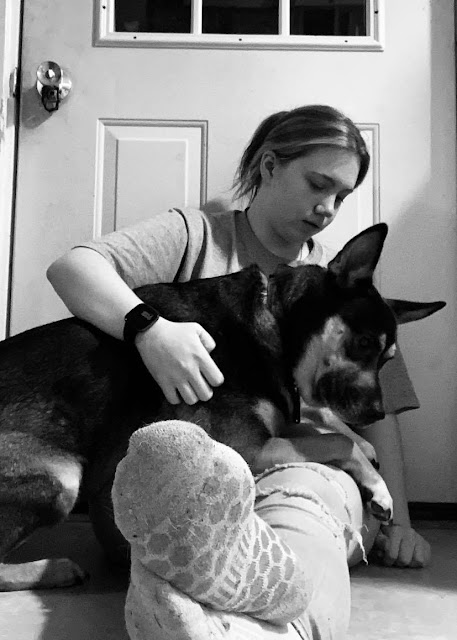
    What is Deep Pressure Therapy? Deep pressure therapy, or DPT, is when a dog uses its body weight to target specific pressure points on the handlers body to help relieve the symptoms of their disability. This task can assist with an array of disabilities. Some of the most common things this task can help with is pain management, lowering the handlers heart rate, and helping reduce anxiety in handlers with disabilities like panic disorder, depression  and (C)PTSD.  How Do I Train DPT? First, decide a command name and do research to discover what pressure points need to be stimulated to help relieve your symptoms. After you have come to a decision on the above, grab some treats and your dog! As it would be virtually impossible to go over how to train this for every single pressure point, I will be using the ones on the upper thighs to go over how to train this. The training is the same for the most common ones!  To begin, sit on the edge of a chair or your couc...

Service VS Therapy VS Emotional Support Animals

Image
 I have been getting an influx of messages asking what is a service dog, and how do they differ from other types of assistance animals? In this article I will be going over the differences between the 3 along with the laws pertaining to them.  Service Dogs: A Service dog is any dog that has been trained to perform a task to aid their disabled handler. some of these tasks (but not all) are described below: Deep Pressure Therapy: this is when a dog is trained to use its body weight to target specific pressure points. This can help lower heart rate, bring someone with PTSD out of a flashback or panic attack, lessen the time someone has a seizure, reduce pain, and so much more! This can be compared to someone who has sleep insomnia using a weighted blanket to help them sleep. It may look like the handler is cuddling with their dog, but the dog is actually working when you see it laying on its handlers lap or chest.  Medical Alert: This task is one of the most common. Dogs hav...

Why Prong Collars are NOT actually bad.

 When you think of a prong collar, without knowing better, you imagine pointy spikes getting forced into your dog's throat any time pressure is put on the leash. Many people believe the point of a prong collar is to cause pain when they pull to thus stop the behavior altogether. This is simply false. prong collars actually very rarely cause any pain to your dog. When they do, it's because of poor placement and misuse.  The prong collar was invented by an animal behaviorist and a vet who wanted to keep dogs safe. you may be asking, how does a prong collar keep my dog safe? Here's how.  These collars are designed to evenly distribute pressure around the dog's neck. A traditional flat collar puts pressure directly against the dog's trachea and can actually collapse it. This can be fatal. It's actually unsafe for an extreme puller to wear a flat collar for this reason. Many will say, why not just use a no pull harness instead? No pull harnesses are linked to causing...

Focus

Image
  For this you are going to use a treat and clicker. Put your pointer finger up so it's pointing at the sky. Now hold a treat between your thumb and middle finger in the same hand with your ring and pinky finger down against your palm.. Show them the treat and move your finger up to your nose. As soon as they make eye contact click the clicker and say “yes!! Focus!”. Once they have this down inside, move outside and try it. Keep slowly adding in more distractions until they can do this anywhere!

What Should You do if You See a Service Dog in Public?

Don't pet it! Especially without asking. The dog has an extremely important job to do. Even if you don't see it, chances are the dog is actively working. By petting the dog you can distract it, risking the handlers safely. Also, please don't get angry and yell when we say no. It's not your dog. You are not entitled to pet it just because “its in public”. It doesn't mean it's aggressive. We are not only looking out for our own safety, but we want to get in and out just like everyone else. What's the longest it has taken you to go get a loaf of bread? Most likely 5 minutes on a real busy day, right? Some of us take 30 minutes because we are stopped so people can ask to pet our dog so often. It gets annoying after a while.We just want to be normal.  Don’t talk to or call it. Ignore it and pretend it isn't there. Imagine being disabled to the point you need a service dog, and when you get one people ignore you and only refer to your dog. It not only is not n...

Misconceptions About Service Dogs & The ADA

  There are tons of misconceptions about service dogs and what the laws actually are that pertain to them. Some of these misconceptions include, service dogs must be registered, service dogs must be professionally trained, service dogs must wear gear or identifying markers, and much more! In this article I will be addressing these common misconceptions and helping you learn how the Americans with Disabilities Act pertains to them.    Many people believe that service dogs must be registered. This is easy to believe because when you google “service dog” the first thing to pop up is websites that say things like “Official Service Dog Registry'', “ADA Service Dog Registry”, and “United States Service Dog Registry”. These all sound really legitimate, right? Well unfortunately they are not. There are tons of people out there that take advantage of disabled people by making websites like this. Most of them claim to make a service dog real, all you have to do is register it. ...

How to Train Your Dog to Stop Running Out The Door

  Assign a designated spot for the dog to go to Ensure the spot is close enough a command can be clearly given from the door Choose a name for that spot. E.g spot, place, bed Start by training the dog to go to the selected spot when given the command. E.g “place”. To do this lure the dog into the spot with a treat and instantly mark and reward with a “yes! Place! Good girl/boy!” Followed with a treat. Make a big deal out of the dog being there to positively reinforce the behavior. After the dog goes to the spot without hesitation move approximately a foot away, point to it, and say place. Repeat the same reward as soon as they go there. As the dog progresses add more space between them and you when giving the command. After the dog will do this with no delay start adding in the door. Go to the door and open it. As you open the door tell the dog to go to their place. After a few times refrain from saying the word and only point while you open the door. Eventually the dog will go to ...

Litter Mate Syndrome Explained

  Littermate Syndrome - A Trainer's Perspective   Getting two dogs at the same time seems like an amazing idea. Dogs are social animals, and two puppies can entertain each other and keep each other company. So, what’s the problem with bringing home two puppies at the same time?  Professional trainers like myself highly recommend  against  bringing home two young dogs around the same age, especially two from the same litter. While this sounds like a good plan at first, in reality it more often than not causes a lot of issues including aggression. In addition to the issues one might expect with bringing home two pups like double food and vet costs and double the training work, new puppy also owners need to focus on how the puppies will develop. Puppies’ brains continue developing until they achieve full sexual maturity (and after that for a short time), and there’s extensive amounts of  research that suggests bringing two puppies home at the s...

Service Dog Task Training: Circle

Image
  Disclaimer: teaching your dog this does not make it a service dog unless you have a disability that it helps mitigate. Please refer to the ADA's service dog FAQ (https://www.ada.gov/regs2010/service_animal_qa.html) for any questions pertaining to service dogs.  Many people with PTSD struggle with people touching them and walking through crowds. Most service dog handlers with PTSD train their dog a task called "circle" (or sometimes rotate) to help limit how often this can occur. To train your dog to do this follow the steps below. You Will Need: -treats To start, you will need to be inside your home where there are limited distractions and you can have your dog off leash. I suggest walking your dog and doing basic obedience training before you start this. Take a treat in your hand and get your dogs attention with it. Now lure your dog in a circle around you with the treat. For the beginning of this exercise you should spin in a circle with your dog. Use a toy or other o...

Dog Refusing to Eat Unless You Switch Their Food

     Dogs are smarter than we give them credit for sometimes! After only a few times of you giving them a super yummy topper or new food when they don't eat, they will learn to hold off so something better comes! Some dogs have been known to wait 3+ days in hopes they will get something better.      To fix this, put your dogs food down and wait 15 minutes. If they do not eat, pick it up and put it where they cannot get it. Wait until it is dinner time and repeat this process. This will teach your dog that if they don't eat the food you give them, they will not get to eat at all. Resist the urge to give them something better! I know for the first few days it is hard, but this is for your dogs own good. Stick to this process and after a short time your dog will start eating what they were given. 

Barking

Image
       You will need: -leash -treats -patience      To start you will need to always have your dog on a leash. it can be a short traffic leash or a normal 6ft leash. As soon as the dog barks, go get them by the leash & say “Thank you! Come get a treat!” and quickly take them to where the treats are (away from whatever is triggering them to bark). Give them a treat and praise them for being quiet as they eats it. Take your time so they forget about the distraction. Make sure you remain calm so your dog does not feed off of you!      Once your dog starts to expect the above routine & they starts coming to you for a treat when you say “Thank you” move on to the below... When your dog barks, say “Thank you” and meet them wherever the treats are. Stay with dog until the dog is calm. remember to remain calm yourself! after that, when the dog barks, say “Thank you”. They should come see you wherever you are at. Give them a treat....

Potty Training

Image
          Most dogs will wait until no one is looking to pee or poop in the house. In order to fix this you need to be able to catch them in the act. Go back to housebreaking 101. The dog is never out of your sight. If you need time to take care of other things and you cannot watch the dog then they need to be crated or in an x pen.       Anytime they are out in the house they need to be tethered to you. As soon as you see them getting ready to pee or poop, interrupt them with a clap of your hands and immediately pick them up and take them outside. Tons of praise when they do pee or poop outside.  Clean up any accidents inside with a good enzymatic cleaner to thoroughly remove all traces of the smell.  Consistency is key to fixing this.      Get a potty bell that can hang from the door knob. They have them in pet stores and on Amazon. Each time you go to the door, touch the bell to your dog's nose. As the bell to...

Come

Image
     Get your dog to stay. After they hold the stay successfully tell them to come. if you have to, use a treat or toy to lure them to you. Once they are in front of you, reward them with a treat or by playing with them and telling them "good girl/boy!"  Note: You can also play a game where someone stands 6-10 feet from you and your dog. take turns calling him/her to each other and treating them when they come.